mail@hostmargin.com
 🔥 Free .COM Domain with any Shared Hosting Annual Plan! 🚀



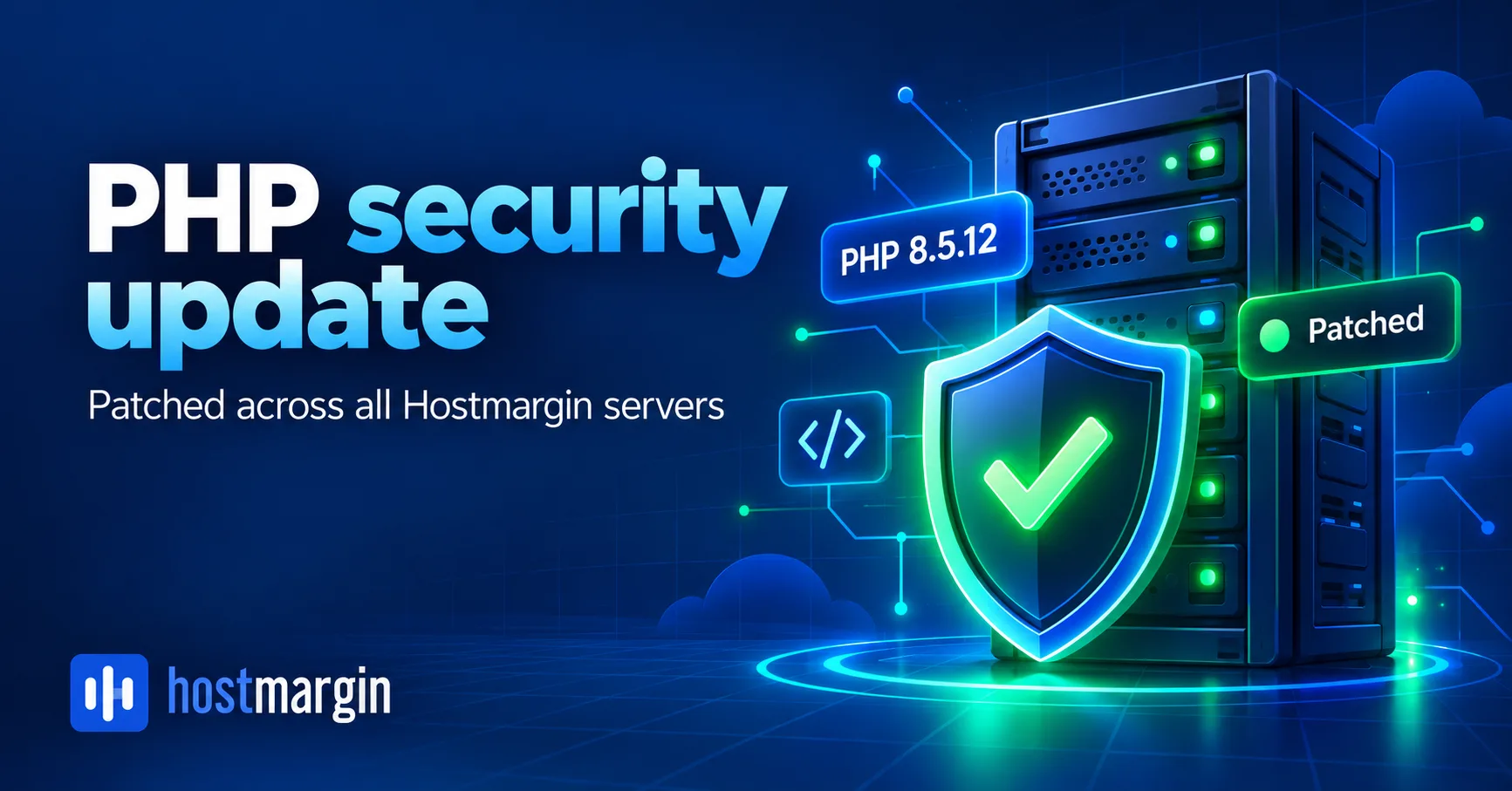
How we patched the October 2026 PHP security flaw across Hostmargin
Two critical PHP bugs, rated 9.2 out of 10, could let attackers run code on a server without logging in. Here's how we patched every Hostmargin server, and what you should check on your site today.
On the evening of 21 October, the PHP team published something no hosting company wants to read: two critical vulnerabilities that can let an attacker run code on a server without logging in. They were rated 9.2 out of 10. The advice was blunt: update now, because there's no reliable workaround.
Almost every website we host runs on PHP, including WordPress, WooCommerce, Laravel and most business sites. So this one was about all of you, not some of you.
Here's what happened, what we did, and what (if anything) you need to do.
What the bugs actually were
You don't need the deep technical detail, but it helps to know roughly what we were up against.
The first bug (CVE-2026-109618) happens when PHP runs out of memory in the middle of handling a request. PHP can get interrupted while some of its internal data is only half set up, and the clean-up step that runs afterwards trusts that half-finished data. An attacker who can push PHP into that state can abuse it.
The second bug (CVE-2026-109619) is about leftovers. A PHP worker handles many requests one after another. In some cases, a piece of internal state from one request survives after its memory has been freed, and the next request on the same worker can pick it up before it's reset.
The worrying part is that, in the PHP team's words, an attack could run "before any application code runs." Your WordPress security plugin never gets a chance to step in. That's why this needed fixing at the server level, by us.
What we did
The PHP team sent an advance notice on 20 October, so we were ready to move as soon as the fixed versions came out. Once PHP 8.5.12, 8.4.27 and 8.3.36 were released, we:
- Installed the patched PHP versions on our servers. Your site keeps the same PHP branch it was on (8.3 stays 8.3, 8.4 stays 8.4); only the patch number moved up. So nothing in your code needed to change.
- Restarted every PHP worker. This sounds small, but it matters. The second bug lives inside running workers, so a server with the new PHP installed but old workers still running wouldn't be safe. We made sure every pool was restarted.
- Kept the CGI handler switched off. The PHP team listed php-cgi among the affected setups. Our sites run on PHP-FPM and FastCGI, and the plain CGI handler is disabled on our servers. That's one less door to worry about.
- Looked at sites still on old PHP versions. PHP 8.1 and older no longer get official updates from the PHP team, so they're the most exposed. If your site is one of them, please see the note below. We'd much rather help you move to a supported version now than wait for the next problem.
- Watched our servers closely after the update for crashes or anything unusual.
There was no downtime beyond a few seconds while each PHP pool restarted. Most of you won't have noticed anything at all, which is exactly how it should be.
What you should check
For most customers, nothing. If your site is on PHP 8.2, 8.3, 8.4 or 8.5 with us, you're on a patched version.
That said, it's worth two minutes of your time:
- Check your PHP version. In Plesk, go to Websites & Domains → PHP. You should see 8.3.36, 8.4.27 or 8.5.12 (or 8.2.35). If you see 8.1 or older, please read the next point.
- If you're on PHP 8.1 or older, plan an upgrade. These versions are out of support and don't receive the official fix. Most WordPress sites run fine on 8.3. If you're unsure, open a ticket and we'll check your site with you before switching.
- Keep your apps updated too. Server patches protect PHP itself. Your WordPress core, themes and plugins still need their own updates.
- Running your own VPS with us? You manage PHP there, so please update it yourself and restart PHP-FPM, or tell us and we'll help.
Why we're telling you this
Security updates usually happen quietly, and you never hear about them. We think you should know when something serious comes up and what we did about it. It's your website and your business running on our servers.
If you have any questions about this update, or want us to look at your site's PHP version with you, just open a ticket from your client area. A real person from our team will get back to you.
Stay safe,
The Hostmargin team